Wisdom Tooth Extraction in Chicago, IL
The last teeth to arrive, wisdom teeth are also the ones most likely to cause trouble. When the jaw lacks room for them to come in properly, they can become impacted, bringing pain, infection, and damage to the teeth beside them. Dr. Raffi provides safe, comfortable wisdom tooth removal at Dr. Raffi General & Implant Dentistry, with sedation options to keep you relaxed from start to finish.
What it is
Wisdom teeth, the third molars, sometimes come in impacted, only partly erupted, or push against the teeth beside them. When they do, surgical removal of one or more of them solves the problem.
Who it's for
Most patients are teens and young adults, typically 17 to 25, whose wisdom teeth have turned impacted, painful, infected, or are crowding the neighboring teeth.
How we help
Care includes a digital X-ray evaluation, sedation options to keep you comfortable, a skilled surgical technique, and detailed post-op instructions so recovery goes smoothly.
Pain or swelling toward the back of your mouth? It may be time to have your wisdom teeth checked.
Do You Need Your Wisdom Teeth Removed?
Third molars usually surface between the ages of 17 and 25. If your jaw does not have enough room to accommodate them, they can become impacted, trapped beneath the gum line or angled sideways. From that position they press on the neighboring teeth, which can shift them out of line, invite cavities, or wear away bone support.
Not every wisdom tooth has to come out. Dr. Raffi reviews your X-rays and recommends extraction only when it is genuinely needed to protect your oral health.
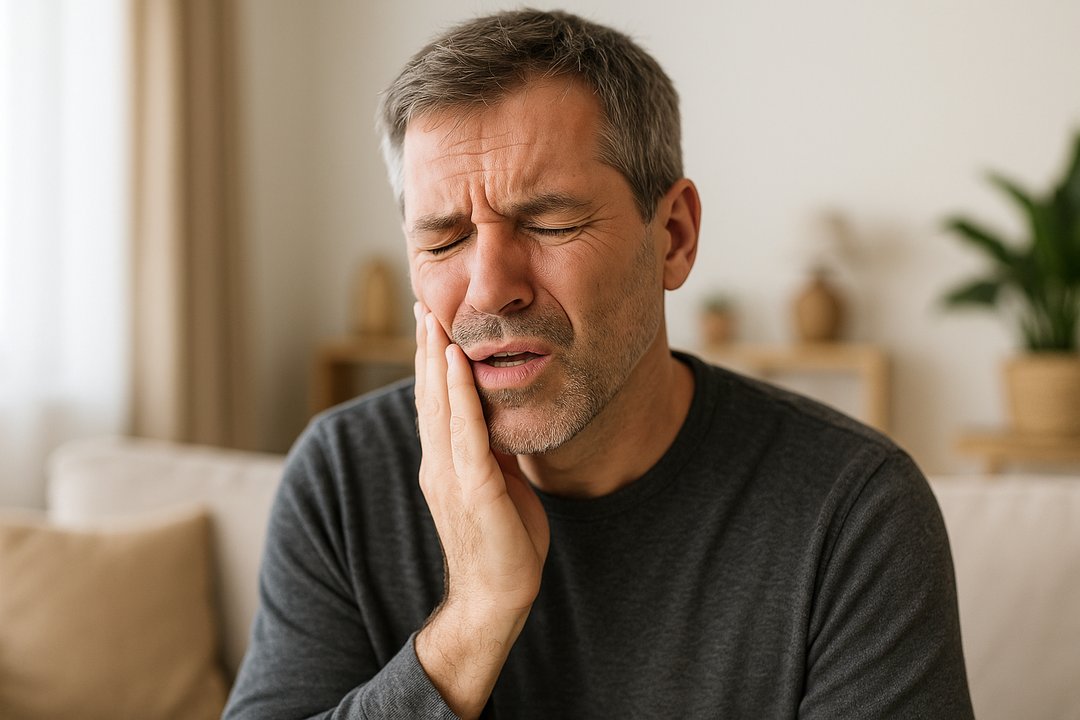
Signs Your Wisdom Teeth Need Attention
- Pain or pressure in the back of your jaw
- Swollen, red, or tender gums behind your last molars
- Difficulty opening your mouth fully
- Bad breath or an unpleasant taste near the back teeth
- Headaches or earaches on one side
- A visible flap of gum tissue partially covering an erupting tooth
- Crowding or shifting of your other teeth
What Happens if Impacted Teeth Are Left Untreated
- Infection: Bacteria can enter around a partially erupted tooth, causing painful infection (pericoronitis)
- Cysts: A fluid-filled sac can form around an impacted tooth, damaging the jawbone and nerves
- Damage to neighbors: Pressure from impacted teeth can cause cavities or bone loss in adjacent molars
- Crowding: Wisdom teeth can push other teeth out of alignment
- Gum disease: Hard-to-clean areas around impacted teeth become breeding grounds for bacteria
When to call us: Severe pain, swelling that spreads to your cheek or neck, difficulty swallowing, fever, or pus drainage near the back of your mouth.
Seek emergency care for facial swelling that affects breathing or swallowing, or high fever with inability to open your mouth.
The Extraction Procedure

Procedure Steps
- Evaluation: Dr. Raffi reviews your X-rays to determine the position and condition of your wisdom teeth
- Anesthesia: The area is numbed with local anesthetic. Sedation is available for anxious patients or complex extractions
- Access: If the tooth is impacted, a small incision is made in the gum tissue to expose the tooth and bone
- Removal: The tooth is carefully extracted, sometimes in sections to minimize bone removal
- Closure: The site is cleaned and may be closed with dissolvable stitches to promote healing

Sedation Options
- Local anesthesia: The standard for straightforward extractions, so you're awake but feel no pain
- Nitrous oxide: Mild relaxation while remaining conscious and responsive
- Oral sedation: A prescription pill taken before your appointment for deeper relaxation, and a driver is required
- General anesthesia: Full unconsciousness for complex cases or severe anxiety, administered by an anesthesiologist
- Ask about our sedation dentistry options
Nervous about the procedure? Several sedation options mean you stay comfortable from start to finish.
Recovery & What to Expect
Recovery Timeline
- Day 1: Rest, apply ice packs, take prescribed medications. Some bleeding and swelling are normal
- Days 2–3: Swelling typically peaks, then begins to improve. Stick to soft foods (yogurt, soup, applesauce)
- Days 4–7: Most patients feel significantly better. Gradually return to normal foods as comfort allows
- Weeks 1–2: Stitches dissolve on their own. Avoid straws, smoking, and vigorous rinsing to prevent dry socket
- Full healing: The extraction site fully closes over 3–4 weeks; bone fills in completely over several months

Visit Steps
- Consultation: Dr. Raffi examines your mouth and X-rays to determine if extraction is needed
- Planning: We discuss the procedure, sedation options, and costs before scheduling
- Procedure day: Arrive with a driver (if receiving sedation). The extraction typically takes 30–60 minutes
- Post-op review: We go over detailed recovery instructions and provide prescriptions if needed
- Follow-up: A check-up visit may be scheduled to ensure proper healing
Helpful Tips
- Stock up on soft foods before your procedure day
- Arrange to take 2–3 days off work or school for recovery
- Prop your head up with extra pillows when sleeping to reduce swelling
- Use ice packs on your cheeks: 20 minutes on, 20 minutes off
- Do NOT use a straw, spit forcefully, or smoke for at least 5 days. Doing so can cause a painful dry socket
- Rinse gently with warm salt water starting the day after surgery
Frequently Asked Questions
You should feel no pain during the procedure itself. The area is thoroughly numbed, and sedation is available for added comfort if you would like it, so the extraction is far easier than most people anticipate.
After the anesthesia wears off, moderate soreness and swelling for a few days is normal. Prescribed or over-the-counter pain medication keeps it manageable while the wisdom tooth site heals.
In many cases, yes. Taking out all four in one appointment means a single procedure, one recovery period, and one round of sedation, which many patients find more convenient overall.
That said, if only one or two teeth are actually causing problems, Dr. Raffi may suggest removing just those. We talk through the best approach for your specific situation before scheduling.
Most patients feel significantly better within four to seven days. Swelling tends to peak around the second or third day and then steadily subsides from there.
The soft tissue usually heals over about two to three weeks, while the underlying bone fills in gradually over several months, a process you will not really notice as it happens.
Dry socket occurs when the protective blood clot at the extraction site is dislodged, exposing the bone and nerves underneath and causing an intense, throbbing ache.
You can greatly reduce the risk by avoiding straws, spitting, smoking, and vigorous rinsing for at least five days after surgery. Following your post-op instructions carefully is the single best way to keep the site healing smoothly.
Wisdom teeth are usually evaluated in the mid-to-late teens. When removal is needed, it often goes more easily and heals faster if done between the ages of 17 and 25, before the roots are fully formed.
That window is not a hard rule, though. Wisdom teeth can be safely removed at any age once they start causing pain, infection, or crowding.
Most patients set aside two to three days to recover. Some feel up to light activity the day after a simple extraction, but the surgical removal of impacted teeth generally calls for a few days of rest.
Whatever the case, plan to avoid strenuous physical activity for about a week so the healing site is not disturbed.
Not necessarily. It depends on how complex the extraction is and what you prefer. Many wisdom tooth removals are done comfortably under local anesthesia, where you are awake but feel no pain.
For patients who would rather be more relaxed or fully asleep, oral sedation and general anesthesia are available. Dr. Raffi reviews the options and recommends the one best suited to your case.
The cost of wisdom tooth extraction depends on how many teeth are removed, whether the extraction is simple or surgical, and the type of sedation used. Most dental insurance plans cover a portion of the procedure.
At our Chicago and Bourbonnais, IL offices, we provide a detailed estimate before scheduling and offer financing options so payment stays flexible.
Wisdom tooth pain rarely improves on its own. An early evaluation can prevent complications and make recovery easier.
Related Topics
Visit Dr. Raffi General & Implant Dentistry
Chicago Office
6215 W Touhy Ave
Chicago, IL 60646
Bourbonnais Office
876 N Convent St
Bourbonnais, IL 60914