TMJ/TMD Treatments in Chicago, IL
A jaw that aches, clicks, or struggles to chew, along with recurring headaches, often traces back to a temporomandibular joint disorder (TMD). At Dr. Raffi General & Implant Dentistry, Dr. Raffi treats it with conservative, non-surgical options that ease the pain and bring your jaw back to normal function, from custom night guards to TMJ splint therapy to bite adjustment.
What it is
TMD is a disorder of the temporomandibular joint (TMJ), the hinge linking your jaw to your skull. It shows up as pain, clicking, locking, or restricted jaw movement.
Who it's for
Anyone coping with jaw pain or clicking, frequent headaches or migraines, teeth grinding (bruxism), facial tension, or trouble opening the mouth all the way.
How we help
A thorough clinical exam, digital imaging, custom oral appliances, splint therapy, and bite adjustment. Every option we offer is conservative and non-surgical.
Is jaw pain or clicking wearing on your daily life? An accurate diagnosis is the first step toward lasting relief.
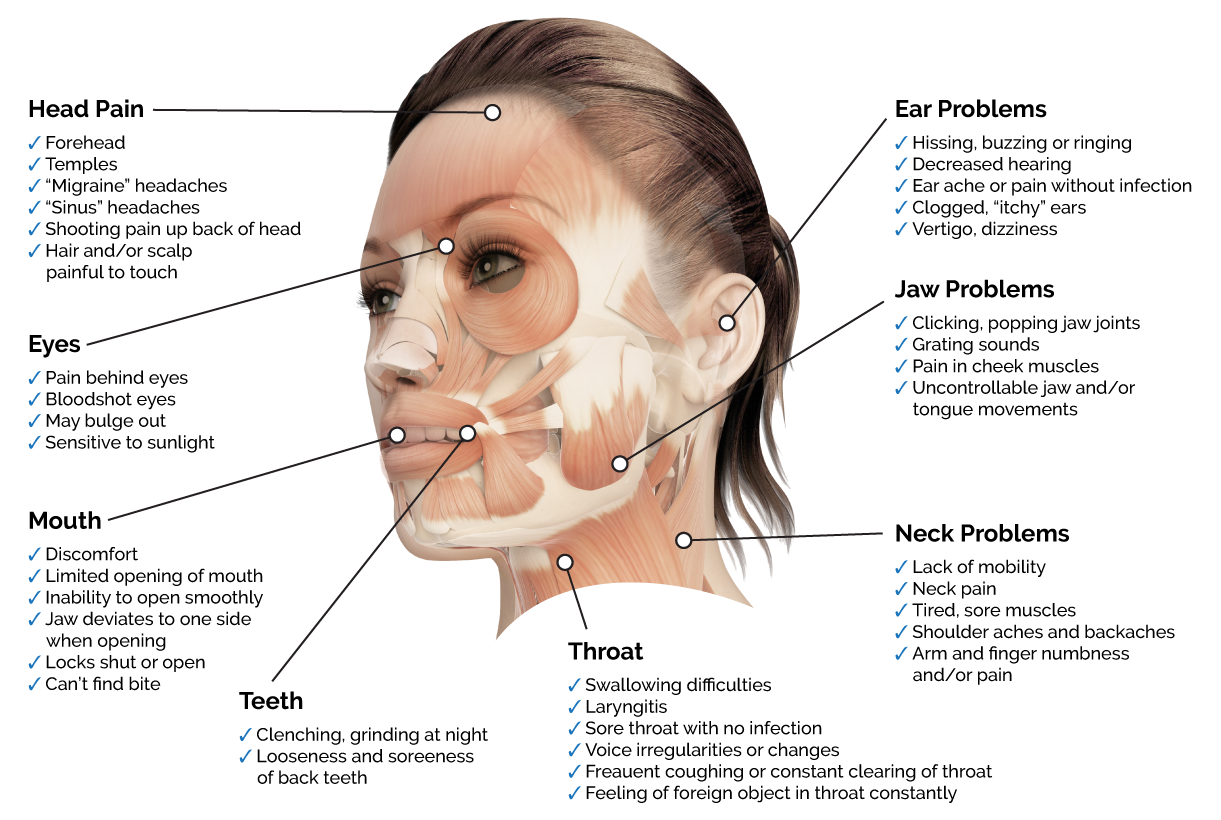
Signs You May Have TMD
Common Symptoms
- Pain or tenderness in the jaw, face, or around the ear
- Clicking, popping, or grinding sounds when opening or closing your mouth
- Jaw locking in the open or closed position
- Difficulty or discomfort while chewing
- Chronic headaches or migraines, especially in the morning
- Earaches or ringing in the ears (tinnitus)
- Neck and shoulder pain or stiffness
Common Causes
- Bruxism: Chronic clenching or grinding of teeth, often during sleep
- Jaw injury: Trauma from an accident, sports, or dental procedure
- Arthritis: Degenerative changes in the TMJ joint
- Bite misalignment: An uneven bite places unequal stress on the joint
- Stress: Tension leads to jaw clenching and muscle fatigue
- Disc displacement: The soft disc inside the joint shifts out of position
Treatment Options
Night Guards & Splint Therapy
- Occlusal (night) guard: A custom plastic appliance worn during sleep to cushion and protect teeth from grinding and clenching
- TMJ splint: Repositions the lower jaw to reduce stress on the joint and relax overworked muscles
- NTI guard: A compact appliance covering only the front teeth. It's less bulky, triggers no gag reflex, and is proven to reduce clenching intensity
- All appliances are custom-made by Dr. Raffi for a precise, comfortable fit
- Conservative, reversible, and often the first-line treatment for TMD
Bite Adjustment
- Selective reshaping: Gentle reshaping of tooth surfaces to create a more balanced bite
- Reduces uneven pressure on the jaw joint that can contribute to TMD symptoms
- A conservative, in-office procedure with no downtime
- Often paired with a night guard or splint therapy for lasting relief
Lifestyle & Exercise Therapy
- Physical therapy exercises: Gentle stretches and strengthening exercises for the jaw muscles
- Stress management: Relaxation techniques to reduce tension-related clenching
- Medication: Anti-inflammatory drugs or muscle relaxants for acute flare-ups
Tips for TMD Relief at Home
- Sleep on your back to avoid putting pressure on your jaw
- Eat soft foods that don't require heavy chewing (yogurt, soup, scrambled eggs, fish)
- Avoid chewing gum, ice, and hard or sticky foods
- Avoid extreme jaw movements, and support your chin when yawning
- Apply moist heat or ice packs to the jaw area for 10–15 minutes
- Practice stress-reduction techniques to minimize unconscious clenching
From night guards to splint therapy, we draw on several approaches to find what works best for your TMD.
What to Expect at Your Visit
Visit Steps
- Comprehensive evaluation: Dr. Raffi examines your jaw, bite, and muscle function and reviews your symptoms in detail
- Imaging: Digital X-rays or other imaging may be used to evaluate the joint and rule out other conditions
- Diagnosis: Based on your exam and imaging, Dr. Raffi explains your specific TMD type and contributing factors
- Treatment plan: We discuss all available options: appliances, bite adjustment, exercises, or a combination. From there, we recommend a personalized approach
- Follow-up: Regular check-ins to monitor progress and adjust treatment as needed
Helpful Tips
- Keep a journal of your symptoms for a week before your visit, noting when pain is worst and what triggers it
- Bring a list of any medications or supplements you take
- TMD often improves significantly with conservative treatment. Surgery is rarely needed
- Night guards may take a few nights to get used to, but most patients adjust quickly
- If you also suffer from chronic migraines, mention this. Treatment may address both issues simultaneously
Frequently Asked Questions
The two terms get used interchangeably, but they describe different things. TMJ stands for the temporomandibular joint, the hinge on each side of your head that connects your lower jaw to your skull. Everyone has these joints, healthy or not.
TMD, or temporomandibular disorder, is the problem that arises when that joint, the muscles around it, or the disc inside it stop working smoothly. So when people say they have 'TMJ,' what they usually mean is TMD, the disorder rather than the joint itself.
Milder cases sometimes settle down with a little self-care: resting the jaw, switching to softer foods, and easing the stress that fuels clenching. If your symptoms are occasional and light, that may be all it takes.
Ongoing or worsening symptoms are a different story. Persistent pain, clicking, or a jaw that locks tends to progress without treatment, and addressing it early usually leads to a smoother recovery than waiting until the joint is more badly affected.
If you clench or grind your teeth, a night guard is one of the most effective and affordable tools available for TMD. Worn while you sleep, it cushions your teeth against grinding, eases the strain on the temporomandibular joint, and often takes away the morning headaches and jaw soreness that come with bruxism.
Whether one is right for you comes down to what is driving your symptoms. Dr. Raffi will evaluate your bite and jaw during your visit and recommend a night guard if it fits your situation.
For the great majority of people, no. TMD responds remarkably well to conservative, non-surgical care, including splints, night guards, bite adjustment, jaw exercises, and everyday habit changes. Most patients find lasting relief without ever approaching an operating room.
Surgery enters the conversation only in the rare cases where these approaches have been fully explored and there is real structural damage in the joint that needs repair. It is a last resort, not a starting point.
Many patients feel a difference within a few weeks of beginning treatment. A night guard works on an ongoing basis, worn each night, while splint therapy often brings noticeable relief in those first weeks as it takes pressure off the joint and lets overworked muscles relax.
Because every case moves at its own pace, Dr. Raffi keeps an eye on your progress and fine-tunes the plan as your symptoms improve.
Stress is one of the most common threads running through TMD. When you are tense, you are far more likely to clench your jaw or grind your teeth, often without realizing it, and that steady tension wears on the temporomandibular joint over time.
Because of that link, calming the stress often calms the symptoms. Relaxation techniques, regular exercise, and solid sleep can meaningfully reduce clenching and the jaw pain that follows.
It depends on your particular plan. Night guards and other occlusal appliances used for TMD are frequently covered under dental insurance, though the details vary from one policy to the next.
You will not have to figure this out alone. At our Chicago and Bourbonnais, IL offices, we will review your benefits with you and explain what is covered before treatment begins, so there are no surprises.
You don't have to live with jaw pain. Schedule a TMJ evaluation and find out which treatment is right for you.
Related Topics
Visit Dr. Raffi General & Implant Dentistry
Chicago Office
6215 W Touhy Ave
Chicago, IL 60646
Bourbonnais Office
876 N Convent St
Bourbonnais, IL 60914