Root Canal Therapy in Chicago, IL
Few procedures do more to rescue a natural tooth than a root canal, which clears away the infection or deep decay driving your pain and lets you keep the tooth you were born with. It is also one of the most common treatments in dentistry, with more than 15 million performed across the United States each year, and one of the most successful. At Dr. Raffi General & Implant Dentistry, gentle techniques and modern technology keep root canal therapy comfortable and free of stress.
What it is
Cleaning the infected or damaged pulp (the nerve tissue) out of a tooth, then sealing the space so infection cannot take hold again.
Who it's for
Anyone with deep decay, a cracked tooth, or a tooth treated repeatedly, along with warning signs such as severe pain, swelling, or lingering sensitivity.
How we help
Digital imaging pinpoints the problem, local anesthesia keeps treatment gentle, and a crown afterward restores lasting strength.
Severe toothache or ongoing sensitivity? Call us right away for an emergency evaluation.
Why You Might Need a Root Canal
At the center of every tooth sits a soft tissue called the pulp, home to its nerves and blood vessels. A deep cavity, a crack, or an injury can breach the hard outer layers and let bacteria reach that pulp, and once they do, infection sets in.
Left alone, that infection tends to spread, building a painful abscess at the tip of the root and eventually costing you the tooth. A root canal reverses the course: it clears out the infected tissue, cleans the inner chamber, and seals it, preserving the tooth's structure while removing the source of your pain.

Signs You May Need a Root Canal
Infected Tooth Symptoms
- Sensitivity to hot or cold that lingers
- Throbbing or severe toothache
- Pain when biting or chewing
- Swelling in the gums, face, or jaw
- A darkened or discolored tooth
- A small pimple-like bump on the gums near the tooth
- Sometimes no symptoms at all, detectable only by X-ray
Benefits of Saving Your Tooth
- Efficient chewing: Maintain your natural bite force and function
- Normal appearance: Your tooth looks and feels natural after restoration
- Protects neighbors: Keeps adjacent teeth from shifting or bearing extra stress
- Prevents bone loss: Keeping the root in place preserves your jawbone
- Cost-effective: Saving a tooth is typically less expensive than extracting and replacing it
When to call us: Severe toothache, swelling, prolonged sensitivity to temperature, or pain that wakes you up at night. These are signs of possible infection that need prompt attention.
Seek emergency care for facial swelling that spreads to the eye or neck, difficulty breathing or swallowing, or high fever.
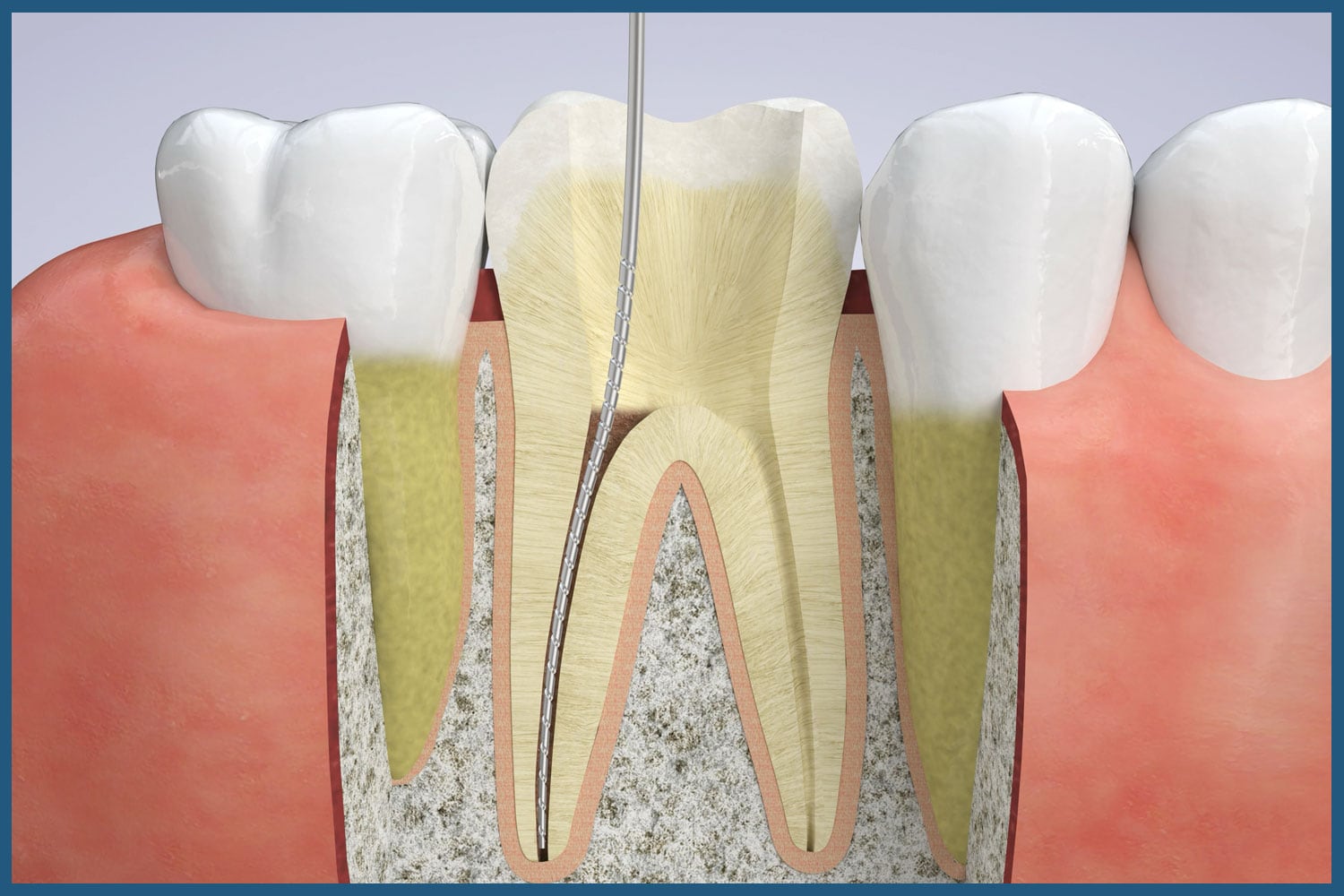
Stages of Root Canal Therapy
The Procedure
- Numbing: The tooth is completely numbed for your comfort. An opening is made through the crown to access the inner chamber.
- Cleaning: The infected pulp is removed and each root canal is carefully cleaned, shaped, and disinfected. Medication may be placed inside.
- Sealing: The canals are filled with a rubber-like biocompatible material to seal them and prevent reinfection.
- Restoring: The tooth is restored with a dental filling and, in most cases, a dental crown to strengthen and protect it for years to come.
Nervous about the discomfort? Most patients tell us a root canal feels no different than a routine filling.
What to Expect at Your Visit
Visit Steps
- Diagnosis: We examine your tooth and review X-rays to confirm the need for root canal therapy
- Treatment plan: Dr. Raffi explains the procedure, timeline, and cost before starting
- Procedure: Most root canals are completed in a single visit lasting 60–90 minutes
- Follow-up: A crown appointment is typically scheduled 2–3 weeks later to permanently restore the tooth
Helpful Tips
- Take any prescribed antibiotics before your appointment if directed
- Eat a comfortable meal beforehand, since your mouth may be numb for a few hours after
- Plan for mild tenderness for 2–3 days (manageable with over-the-counter pain relief)
- Avoid chewing on the treated tooth until your permanent crown is placed
- The tooth's nerve is removed during treatment, so it will no longer feel temperature, but it functions normally otherwise
Frequently Asked Questions
The reputation is far worse than the reality. Before treatment begins, the tooth and the tissue around it are fully numbed with local anesthesia, so what you feel during a root canal is mild pressure and movement rather than pain. Many patients are surprised to find it no more eventful than having a filling placed.
It helps to remember what a root canal is actually doing. The severe, throbbing pain that brings people in is caused by the infected pulp inside the tooth, and removing that tissue is what ends the pain rather than creating it.
Afterward, it is normal for the tooth to feel a little tender for a day or two as the area settles. That soreness is usually mild and responds well to over-the-counter pain relievers.
A typical root canal is finished in one appointment that runs about 60 to 90 minutes, depending on which tooth is involved and how many canals it has. Front teeth tend to go quickly, while molars with several curved canals take longer.
Occasionally a tooth with unusually complex anatomy or a stubborn infection is treated over two visits so it can be cleaned and medicated thoroughly. Dr. Raffi will walk you through the plan and tell you exactly what to expect before any work starts.
An infected tooth does not heal on its own, and putting off a root canal simply gives the infection time to move deeper. What often follows is a painful abscess at the tip of the root, loss of the bone that supports the tooth, and eventually loss of the tooth itself.
The trouble is not always confined to your mouth, either. In some cases an untreated dental infection can spread to surrounding tissues and become a more serious health concern that is harder and costlier to resolve. Treating the tooth promptly keeps a manageable problem from turning into an urgent one.
A root canal is meant to be a permanent fix. Once the tooth has been treated and properly restored, it can last a lifetime with the same care you give the rest of your teeth: daily brushing and flossing plus regular checkups.
The restoration on top matters just as much as the root canal itself. Covering the treated tooth with a crown protects it from fracture and is one of the biggest factors in how many years it goes on serving you.
In nearly every case, keeping your own tooth with a root canal is the better choice. Nothing replaces a natural tooth quite as well, and saving it avoids the added cost and treatment time that come with an extraction and its replacement.
Holding on to the natural tooth offers several advantages:
- You keep your natural bite and chewing strength
- Neighboring teeth stay put instead of drifting into the gap
- The jawbone around the root is preserved
- You sidestep the expense of a bridge or implant
Extraction becomes the sensible option only when a tooth is too damaged or fractured to save. You can weigh the two paths side by side on our Root Canal vs. Implant page.
Most of the time, yes. A root canal hollows out the inner structure that once gave the tooth its strength, which leaves it more brittle and prone to cracking under everyday chewing. A crown caps the tooth, rebuilds that strength, and shields it from fracture.
Front teeth are the occasional exception. Because they take on lighter biting forces, some can be restored with a filling alone. Dr. Raffi will look at how much healthy structure remains and recommend the restoration that protects your tooth best.
The price of a root canal depends mainly on which tooth needs treatment, since a front tooth with one canal is simpler than a molar with three or four, and on whether any additional work is required. Because of that, we give you a clear estimate before treatment rather than a one-size-fits-all number.
Our Chicago and Bourbonnais, IL offices work with most dental insurance plans, and we are glad to review your benefits with you. If you would like to spread the cost out, ask about our financing options for flexible payment plans.
Root canals succeed more than 95% of the time, so failure is uncommon. Now and then a treated tooth develops a new infection, or a canal proves difficult to seal completely, and symptoms return months or years later.
When that happens, the tooth can often still be saved with retreatment, a procedure we offer that reopens the tooth, clears the new infection, and reseals it. If you notice renewed pain or swelling in a tooth that has already had a root canal, let us know so we can take a look.
Tooth pain shouldn't run your days. Root canal therapy saves the tooth and brings lasting relief.
Related Topics
Visit Dr. Raffi General & Implant Dentistry
Chicago Office
6215 W Touhy Ave
Chicago, IL 60646
Bourbonnais Office
876 N Convent St
Bourbonnais, IL 60914