Traumatic Injuries in Chicago, IL
When a tooth is knocked out, dislodged, or broken, every minute counts. The faster you get expert care, the better the odds of saving it. Dr. Raffi is trained at Dr. Raffi General & Implant Dentistry to handle every kind of dental trauma, from a tooth shoved out of position to one that has come out entirely. If you or a family member has had a dental injury, call us right away.
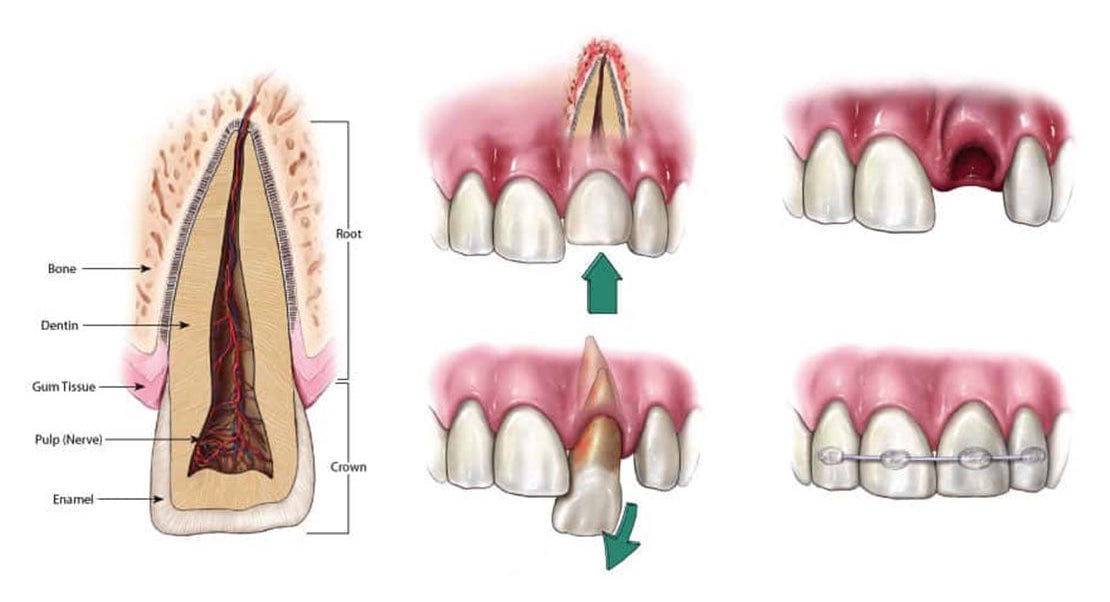
What it is
Sports, a fall, an accident, or an unexpectedly hard bite can all displace, loosen, fracture, or knock out a tooth. Any such injury falls into this category.
Who it's for
Children, teens, and adults alike can be affected. It covers anyone whose tooth has been knocked out, pushed out of position, cracked, or loosened by an injury.
How we help
We provide same-day emergency evaluation, reposition and stabilize displaced teeth, and turn to root canal therapy when that is what it takes to save the injured tooth.
Tooth knocked out or injured? Call us now. Time is the biggest factor in saving it.
Dislodged (Luxated) Tooth
- What happened: The tooth has been pushed partially into, out of, or sideways within its socket during an injury
- Immediate action: Do not try to force the tooth back into position yourself
- Treatment: Dr. Raffi repositions the tooth and stabilizes it with a splint
- Root canal: Typically needed within a few days of the injury to save the tooth
- Prognosis: Good when treated promptly, since most dislodged teeth can be saved
Knocked-Out (Avulsed) Tooth
- How common: More than 5 million teeth are knocked out every year in children and adults
- Time is critical: A tooth reimplanted within 30–60 minutes has the highest chance of survival
- Treatment: Dr. Raffi reimplants the tooth and splints it in place for several weeks
- Root canal: Usually performed 1–2 weeks after reimplantation
- Prognosis: With fast action, a knocked-out tooth can last for many years after reimplantation

Other Traumatic Injuries
- Chipped or fractured tooth: Minor chips may need only bonding; deeper fractures may require a crown or root canal
- Root fracture: A crack in the root of the tooth, with treatment depending on the location and severity
- Loosened tooth: A tooth that has become loose but not displaced may stabilize on its own or need splinting
- Jaw fracture: If you suspect a broken jaw, go to the emergency room immediately
If a tooth is knocked out: Handle it by the crown only (not the root). Rinse gently with water. Try to place it back in the socket. If you can't, keep it in milk or saliva. Get to our office within 30–60 minutes.
Call 911 if the injury involves loss of consciousness, uncontrolled bleeding, difficulty breathing, or a suspected jaw fracture.
What to Do After a Dental Injury
Knocked-Out Tooth: Step by Step
- Find the tooth and pick it up by the crown (the white part). Never touch the root
- Rinse gently with water if the tooth is dirty. Do not scrub, dry, or wrap it in cloth
- Try to reimplant it by gently pressing it back into the socket. The sooner, the better
- If you can't reimplant: Place the tooth in a cup of milk, saline, or hold it inside your cheek (next to saliva)
- Get to our office or an emergency room within 30–60 minutes for the best chance of saving the tooth
How to Prevent Dental Injuries
- Wear a properly fitted mouthguard during all contact sports and recreational activities
- Use a seatbelt in vehicles and appropriate car seats for children
- Avoid chewing on hard objects like ice, popcorn kernels, pens, and hard candy
- Childproof your home, since sharp furniture edges and slippery floors are common causes of falls
- If you grind your teeth at night, a night guard helps protect against fractures
- Schedule regular dental checkups to identify and treat weakened teeth before they break
After a dental injury, acting fast can be the difference between keeping the tooth and losing it. Call us right away.
What to Expect at Your Emergency Visit
Visit Steps
- Immediate assessment: Dr. Raffi evaluates the injury, checks for damage to surrounding teeth, and takes digital X-rays
- Repositioning: If a tooth is dislodged or knocked out, it's carefully placed back into the correct position
- Stabilization: A flexible splint is bonded to the injured tooth and neighboring teeth to hold it in place during healing
- Root canal timing: Depending on the injury type, root canal treatment may be performed immediately or scheduled within 1–2 weeks
- Follow-up: Regular monitoring to ensure the tooth is healing properly and the splint can be removed (usually 2–4 weeks)
Helpful Tips
- Call us before you arrive so we can prepare for your emergency
- Bring any tooth fragments or the knocked-out tooth in milk or saliva
- If bleeding, apply gentle pressure with a clean cloth or gauze
- Over-the-counter pain relievers can help manage discomfort on the way to our office
- Children's baby teeth that are knocked out are generally not reimplanted, but still call us for evaluation
Frequently Asked Questions
Yes, provided you act quickly. A tooth reimplanted within about 30 minutes has the best chance of surviving, and even after an hour reimplantation is still worth attempting. The key is keeping the tooth moist, in milk or your own saliva, and reaching a dentist as fast as you can.
Get to one of our Chicago and Bourbonnais, IL offices, or the nearest emergency room, as soon as possible. Once you arrive, Dr. Raffi will splint and stabilize the tooth and perform root canal therapy to give it the best chance of long-term success.
No. A knocked-out baby tooth should not be reimplanted, because doing so can damage the permanent tooth developing in the gum beneath it.
Still bring your child in for evaluation, though. We want to confirm that no other teeth were injured and that the underlying permanent tooth is developing as it should.
A flexible splint usually stays in place for about two to four weeks, with the exact length depending on the type and severity of the injury.
Dr. Raffi monitors the tooth as it heals and removes the splint once it has stabilized, so the timing follows how well the tooth is recovering rather than a fixed schedule.
In many cases, yes. When a tooth is dislodged or knocked out, the blood supply to the pulp, the nerve inside, is often disrupted. Root canal therapy is frequently needed within days to weeks of the injury to prevent infection and preserve the tooth.
Dr. Raffi keeps a close eye on the injured tooth and recommends the right timing for treatment, so the pulp is addressed before it can cause bigger problems.
Cracked teeth run the full range, from minor surface lines to deep fractures that reach the root. The right treatment depends on how severe the crack is, spanning anything from a simple filling or crown to root canal therapy.
For a fuller look at the different types of cracks and how each one is handled, see our cracked teeth page.
A custom-fitted mouthguard is the single best defense against dental injuries in sports. Store-bought guards offer some protection, but a custom guard made at our office fits more precisely, stays put during play, and cushions impact far better.
We recommend a mouthguard for every contact and collision sport. It is a small, comfortable step that can prevent a painful and costly dental emergency down the road.
A dental emergency can't wait. If you or your child has suffered a dental injury, call us now.
Related Topics
Visit Dr. Raffi General & Implant Dentistry
Chicago Office
6215 W Touhy Ave
Chicago, IL 60646
Bourbonnais Office
876 N Convent St
Bourbonnais, IL 60914